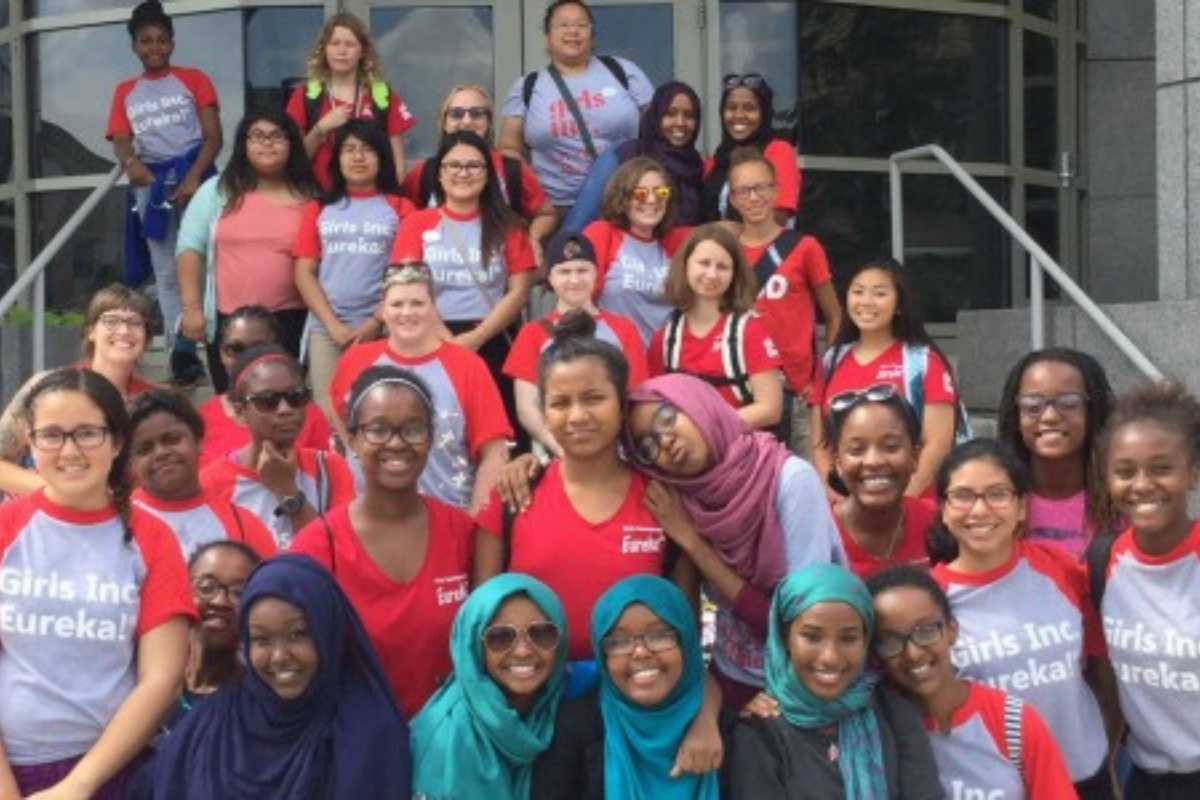
YWCA Minneapolis’ Eureka! program for girls in grades 8-12, recently took a field trip to the Mayo Clinic in Rochester. We had a very full agenda, which included participating in three labs led by grad students and staff (mostly women) and learning about the various research being conducted at the Mayo Clinic. There was also a career panel and a keynote session where youth could ask questions and learn why these women chose careers in research and what inspired them in their jobs.
Lab 1: Motion Analysis Lab
Youth visited the motion analysis lab, which had a person hooked up to multiple sensors and a projector. Whenever she moved, the stick figure on the projector moved in response to the attached sensors. There were also sensor plates on the floor. They explained that one of the things they use this lab for is children with Cerebral Palsy. Sensors are placed on the children as they walk on the sensor plates. This provides information to a physical therapist, who can treat patients and help them walk better based on the collected data.
Another motion-related experiment involved a robotic hand. The lab staff demonstrated how the robotic hand worked with sensors hooked up to muscles. Whenever the staff member flexed or relaxed his muscles, his hand would open and close, making a fist.
Lab 2: Zebrafish
Youth saw the many zebrafish studied at the Mayo Clinic. Zebrafish are great for experiments because their bodies are transparent, and all their organs can be seen from the outside. They also have a short lifespan, which makes it easy to study how a disease affects them. Youth observed zebrafish that had just been fertilized that day, and then compared differences between zebrafish that had been fertilized one day and three days earlier.
Career Panel
Female graduate students and staff at the Mayo Clinic spoke about their research and personal history, including what they studied and how they ended up at the Mayo Clinic. Many of the youth were very interested in what the women were studying, much of which revolved around cancer.
One youth asked, “What is the coolest thing that’s happened because of your job?” Two women talked about times when they made scientific discoveries that no one else had known before – they were the first in their field to discover something new. One woman discovered how a specific virus would target and kill cancer cells. She shared that she was the first person with that knowledge and how special it felt. The FDA had recently approved the treatment, and they began testing it on humans that very day.
Lab 3: Regenerative Medicine
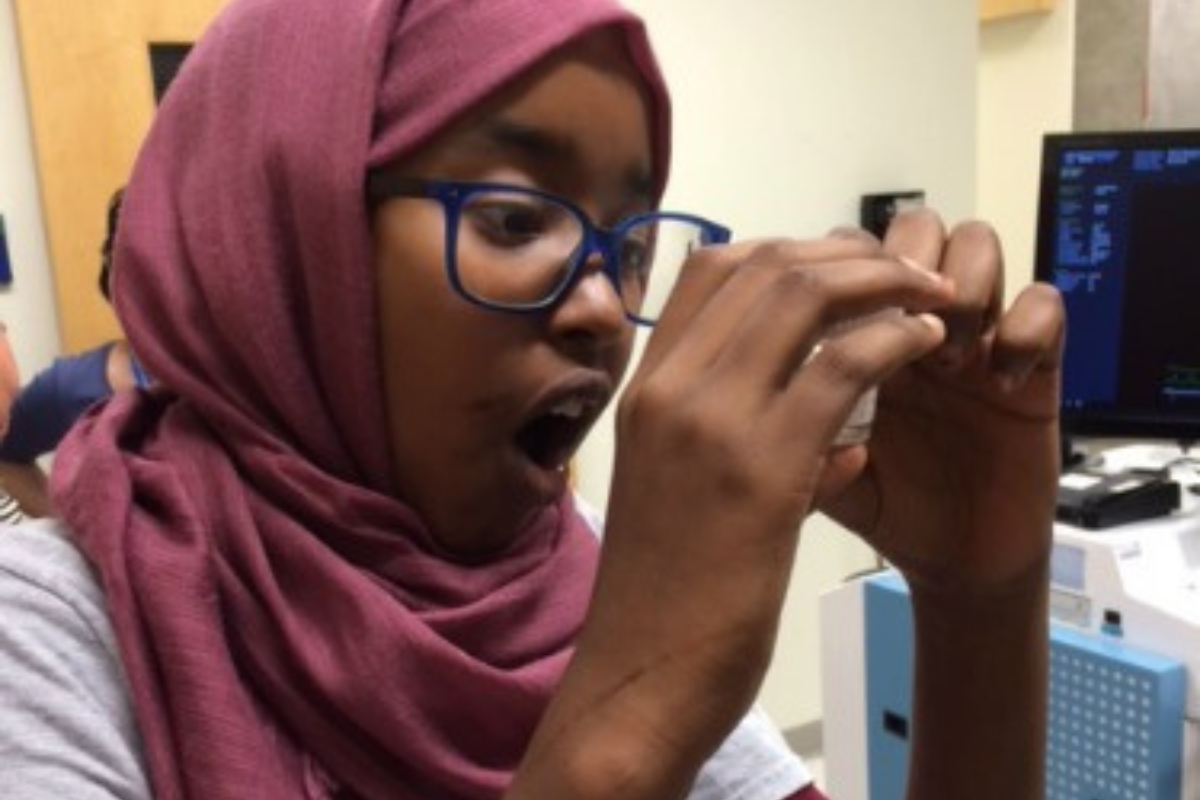
In this lab, youth learned many things about regenerative medicine being used on the heart. There was a 3D printer that could print medical tools tailored to a single patient. They were also exploring printing items with the person’s stem cells embedded in the plastic so the body would not treat them as foreign objects. There was an EKG machine that specifically scanned and tested mouse hearts (see picture of Eureka! youth Najma looking at a mouse heart from Christa) to examine heart defects and how they change across generations. There was also a lab dedicated to growing heart tissue outside the body. Mouse heart tissue cells were displayed under a high-tech microscope that had been living outside of the body for three days. The grad students running the lab talked about their efforts to become one of the first publishers of this type of research.
Keynote Speaker: Dr. Marina Ramirez-Alvarado
Lastly, our youth had the opportunity to listen to Dr. Ramirez-Alvarado speak. She shared what inspired her to pursue the line of research she did, as well as stories from her life, including overcoming stereotypes and challenges faced as a woman of color. She also talked about how she balances her work life with the rest of her life. The youth were very interested in her personal story and asked her many questions. A few told me that they were very inspired by her.
One parent chaperone spent the entire day talking about how inspired and proud she was to be in a room with so many women who had earned or were working toward their PhDs. She said she felt so inspired and energized by these amazing women and thanked us for providing her daughter with so many great experiences.