Inspiring Athletes: Kate Varns’ Journey from Stroke Back to Finish Line
After suffering a stroke in 2024, a frequent Women’s Tri participant completes the event in 2025 as an adaptive athlete and receives the Toni Award.
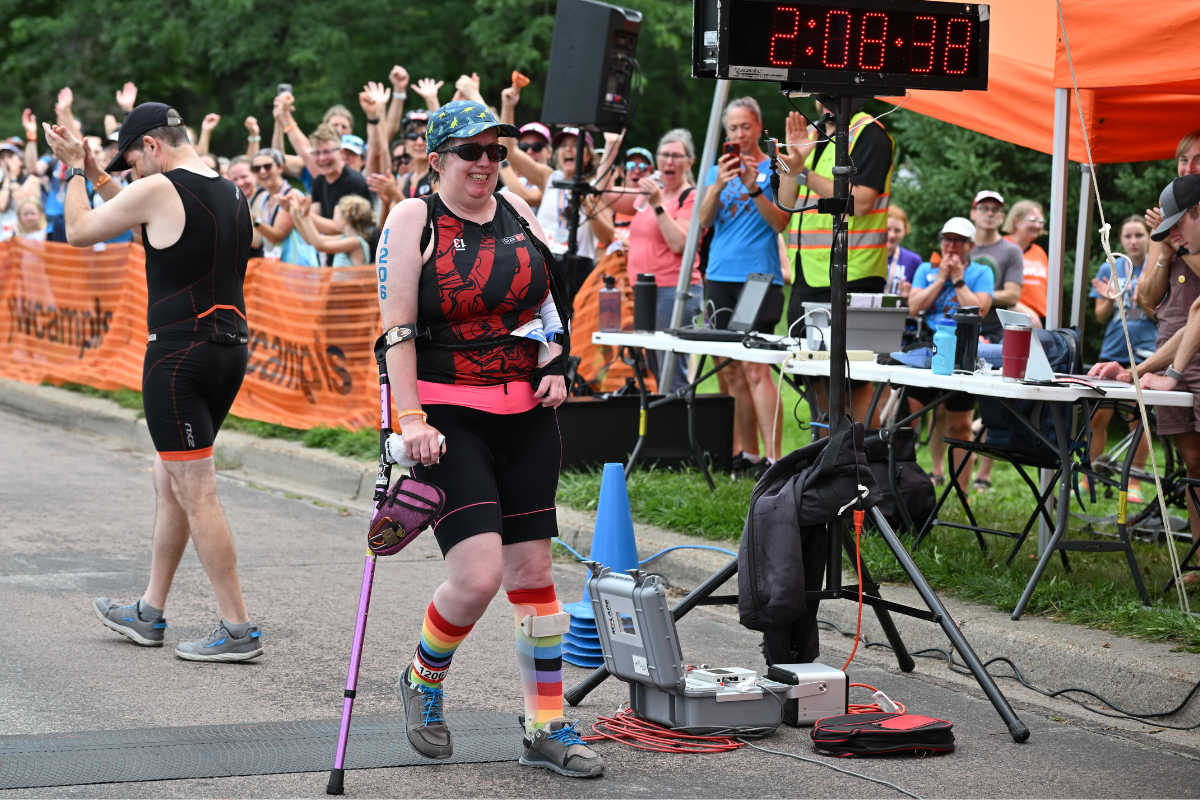
On a humid Sunday morning in August, Kate Varns did what she thought was impossible. She crossed the finish line at YWCA Minneapolis Women’s Triathlon, with hundreds of friends, fans and fellow athletes cheering her name.
She wasn’t the first athlete to cross the finish line; in fact, she was one of the last. It wasn’t her time that made Kate’s feat extraordinary; it was that she was able to compete at all. Kate suffered a stroke in May 2024 and feared that she would never compete again.
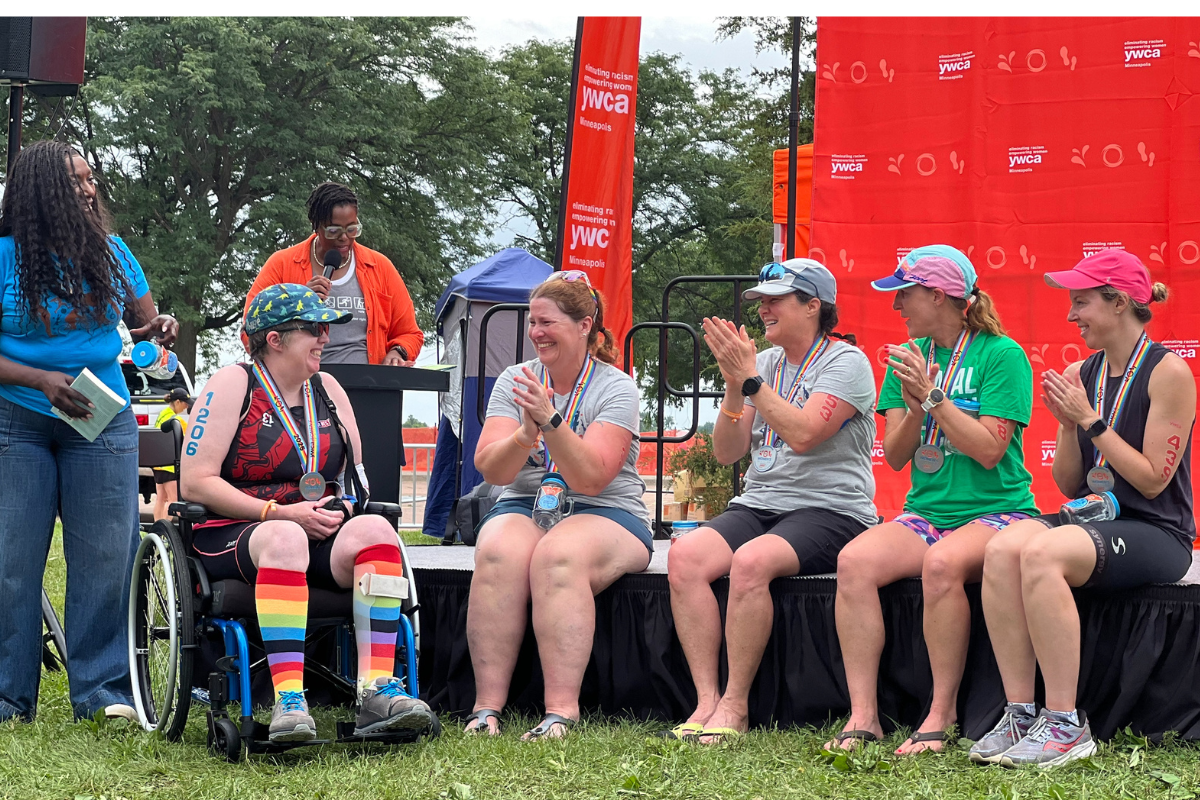
A passionate endurance athlete, Kate is a longtime participant in YWCA Minneapolis Women’s Triathlon and an Ironman. To recognize her incredible commitment to the sport and her ability to overcome hardship, YWCA Minneapolis honored her with the Toni Award for Inspiration and Advocacy.
Getting Into Triathlons Through YWCA Minneapolis Endurance Sports
Kate formed a deep connection to YWCA Minneapolis through endurance athletics. She was interested in trying triathlons, but didn’t think it was realistic because her swimming technique was minimal.
Her husband Glen bought a gift package for YWCA Minneapolis endurance sports classes. It included a two-month swim training program. One of her coaches was current YWCA Women’s Triathlon Race Director Kym Zest. As she continued working with Kym, Kate decided to aim for one of the highest aspirations for endurance athletes: The Ironman.
Reaching the Summit of Endurance Sports
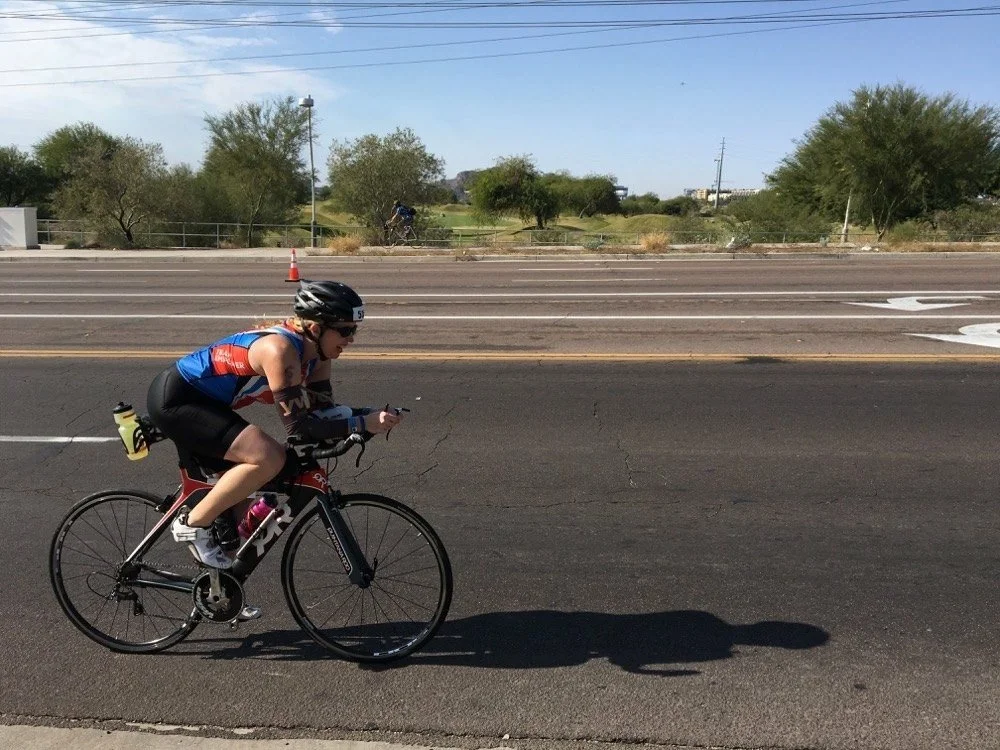
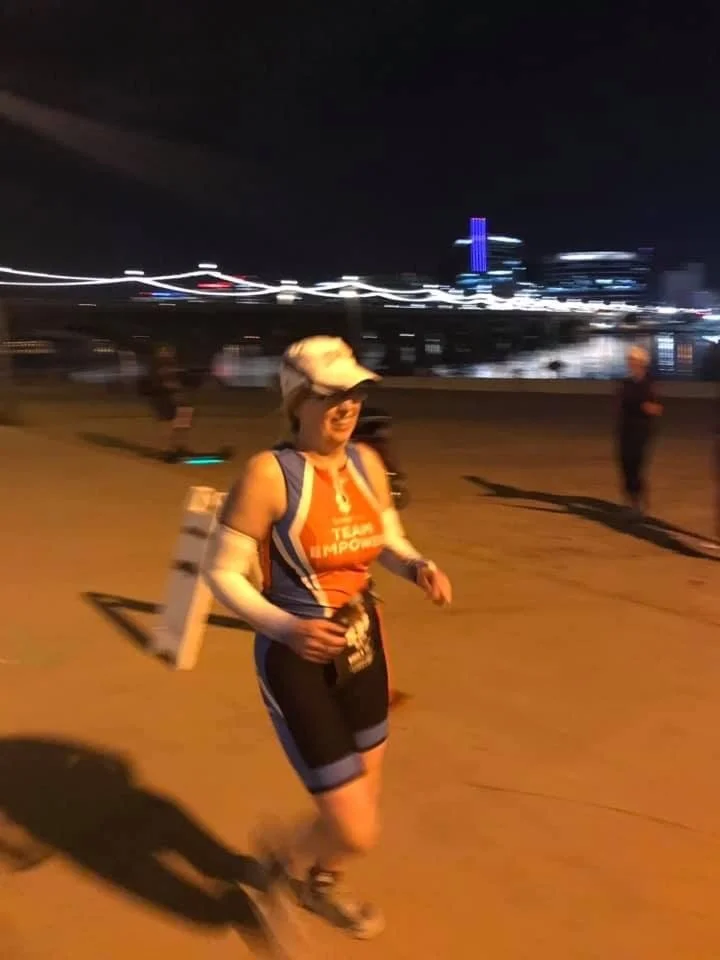
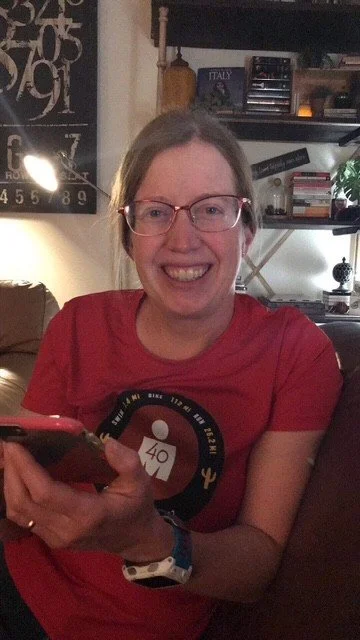
It can take years to prepare for an Ironman. Kate trained for longer events each year: from sprint distance in 2014, through her Ironman year in 2018. Kate also had to decide which Ironman venue was the best match for her skills. The closest Ironman geographically is in Wisconsin, but it has a very hilly bike course.
“I talked with other athletes in the Y community who had done them, and learned Arizona Ironman was sought after because of the flat bike course and dry climate,” Varns said.
Having worked together for years now, Kym wrote a training plan for Kate, and Varns became an Ironman on Nov. 18, 2018. Less than six years later, she suffered a stroke, losing physical capabilities, vision and cognitive abilities.
Taking the First Steps Toward Tri-ing Again
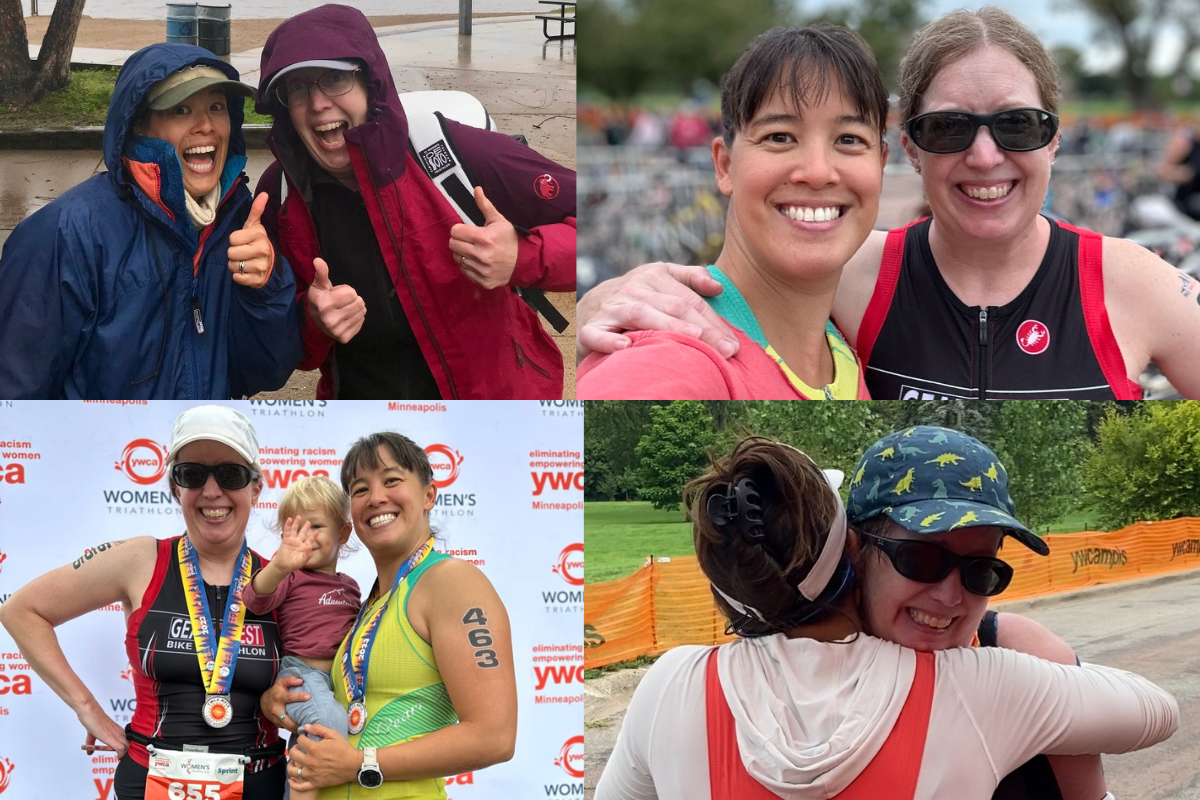
After suffering a stroke in May 2024, Kate spent the summer at Courage Kenny Rehabilitation Institute in Golden Valley, Minnesota.
“While I had great care last summer, there were also lots of tears. I love this community,” Varns said. “I thought I’d never see it again. Being here today was very emotional because it’s a huge part of our lives.”
Kate endured three months of physical therapy, occupational therapy, speech therapy and counselling as part of her recovery.
“Physical therapists are the reason the tri was possible for me,” Kate said. “They spent so much time and energy teaching me to stand, walk and use a crutch. They even gave me an option to pedal a bike. After I was discharged, I continued to do my outpatient rehab at Courage Kenny.”
It was at the facility that the notion of returning to YWCA Minneapolis Women’s Triathlon first came up. Kym visited weekly and even did a swim session with Kate and her physical therapist.
“Kym and I were chatting in my room, and I told her how much I wanted to do the next triathlon,” Kate said. “She explained what it could look like to participate as an adaptive athlete, and I said that’s impossible. There’s no way.”
Making Adaptations to Compete
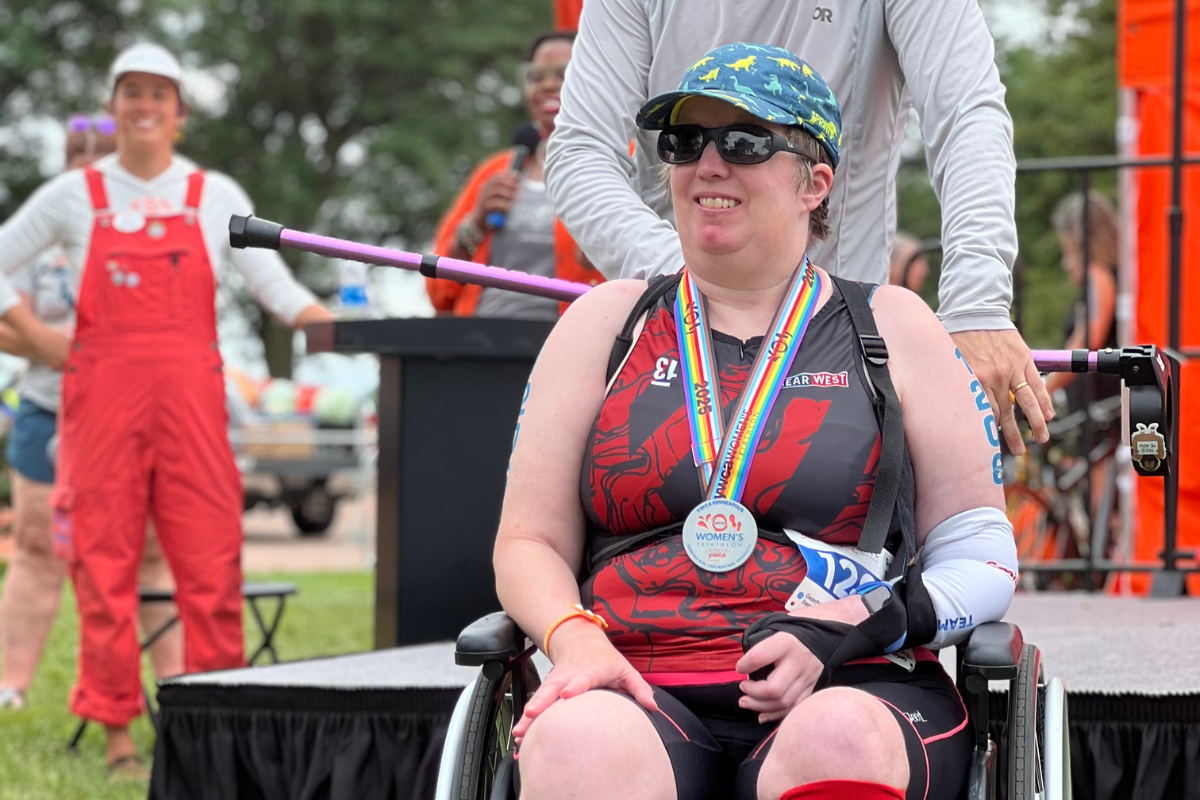
As progress started to build in her rehab, Kate looked further into what adaptive athletes in triathlon do. Accessibility would determine whether training and racing were even possible.
“Once it became clear I could use the crutch to walk, my world opened up again,” Kate said. “I can’t run yet, but I could walk in a race. Swimming, however, was a bit of a learning curve. I had to learn a brand-new stroke instead of using full-on freestyle.”
Kate’s connection to YWCA Minneapolis helped her prepare. In addition to taking part in an open water swim class at Lake Nokomis, she practiced her new stroke, swimming laps at YWCA Midtown. The setting at Lake Nokomis made it difficult to train – there was no family changing room, and the only accessible bathroom was in the women’s training room. Because Kate needed another woman present, Glen's ability to help was limited.
Fortunately, YWCA Midtown made it easier for Glen and Kate to work together with a family changing room. In addition, the lap pool has zero-depth, beach-style entry, making it possible for Kate to enter and leave the pool. It’s a feature few adult lap pools have. On cold or rainy days, she and Glen also walked on the Minneapolis Sports Center walking track.
Accessibility wasn’t just a convenience; for Kate, it was the difference between watching from the sidelines or getting back in the race. Step by step and stroke by stroke, inspiring athlete Kate Varns got ready for YWCA Minneapolis Women’s Triathlon.
A Supportive Environment
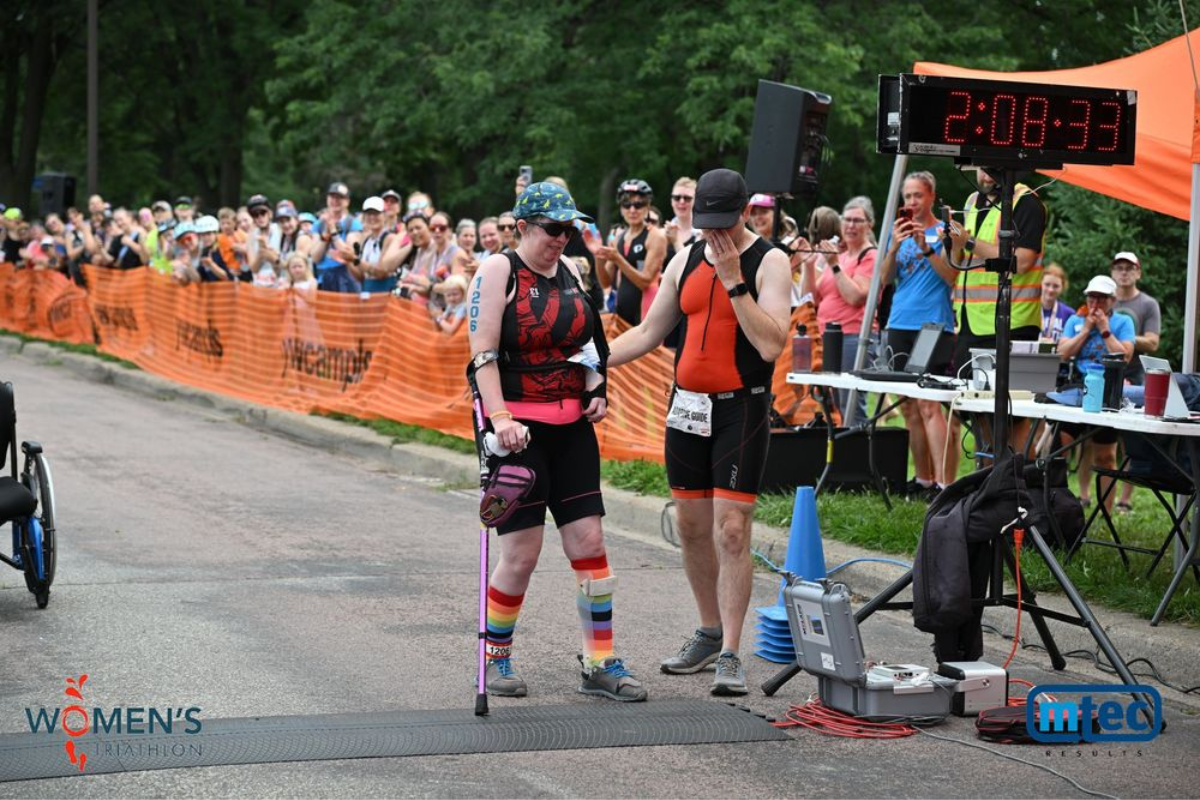
Photo courtesy of Mtech Resuls
For many participants, one of the most appealing parts of YWCA Women’s Triathlon is the all-female community.
“The biggest difference between coed events and YWCA Minneapolis Women’s Triathlon is that it’s such a welcoming and supportive environment,” Kate said. “Men don’t mean to be mean in other races. There are just a lot of nerves and unknowns. Going in knowing it will be a super supportive environment makes a big difference to a lot of people.”
The supportive environment starts long before race day. YWCA Minneapolis releases a training plan in the spring and offers courses to help participants prepare for the event throughout the summer. Kate has helped shape this culture, leading some of these courses in the past.
“The first thing a lot of women say when talking about triathlons is, I could never do that,” Kate said. “I talk about how I got started and what we can do to make it less overwhelming by saying this is what you do, and this is how we get started.”
Returning to the Course
In the final moments before the race, Kate felt nervous. She had a lot of friends in the crowd, including many she met through triathlon and YWCA classes. She wasn’t concerned about her time. Mostly, she just wanted to get started.
It was an emotional time for both Kate and Glen. Glen helped his wife transition from the swim leg to the bike leg, served as pilot on the tandem bicycle and walked the run leg with a wheelchair, so Kate could rest as needed.
As she neared the finish line, friends and fellow athletes lined up and chanted her name. Kym draped a medal around Kate’s neck, and the pair embraced. It was the culmination of over a decade working together, a joyous moment between two close friends.
“Completing the race was very emotional,” Glen said. “We put a lot of our attention over the last year on helping get Kate’s function back to a place where she could walk and bike again. It’s been so much to get to this point. Today is the icing on top.”
Reflecting immediately after the event, Kate recalled a moment she shared with Kym that morning on the beach. “I became Ironman in 2018, and that was a big accomplishment. When I saw Kym on the beach this morning, she said something that made me laugh. She said, ‘I think this beats Ironman.’”
About the Toni Award for Inspiration and Advocacy
A trailblazer and YWCA member, Toni St. Pierre was a staunch supporter of women's athletics. In 1972, she convinced the ACLU to sue the state to allow her to compete against boys before Title IX. The ruling gained national attention, helped make a national case for greater equity in athletic opportunities for girls and came a few months ahead of the Title IX federal legislation.
Toni was a member of Midtown YWCA since the facility opened in 2000. At age 54, she competed in the inaugural Women's Triathlon in 2008. It was her first triathlon, and over time, she was frequently a top competitor in her age bracket.
Toni inspired generations of female athletes. We are proud to honor her legacy through the Toni Award for inspiration and advocacy at the annual YWCA Women’s Triathlon. From Ironman finisher to stroke survivor to adaptive athlete, Kate embodies the spirit of the Toni Award. Her journey is a reminder that the finish line isn’t defined by time, but by courage.