Stories from 2026 YWCA Women's Triathlon
On a beautiful Sunday in early August, nearly 1,500 women and non-binary athletes came together to challenge themselves and celebrate community at the 17th annual YWCA Minneapolis Women's Triathlon.
Women and non-binary athletes ages 11 to 84 and from 33 different states and provinces descended on Lake Nokomis to swim, bike and run together. Many return year after year because of the welcoming and supportive community that has become the hallmark of YWCA Women's Triathlon.
Some, like VIP Race Captain Meg Kelly, have never missed the event. Others competed for the first time. No matter their history, participants celebrated their accomplishments while cheering on those around them.
A Race for Everyone
YWCA Women's Triathlon is the largest women-only triathlon in the contiguous United States. One reason the race is so popular is because it is for everyone. While our mission is to eliminate racism and empower women and girls, the event also demonstrates the powerful connection between physical strength, emotional resilience, wellness and belonging.
Many endurance sporting events cater to elite athletes who are working towards personal records (PRs) and qualifying for other events. Those athletes are welcome at YWCA Women's Triathlon, and so is everyone else.
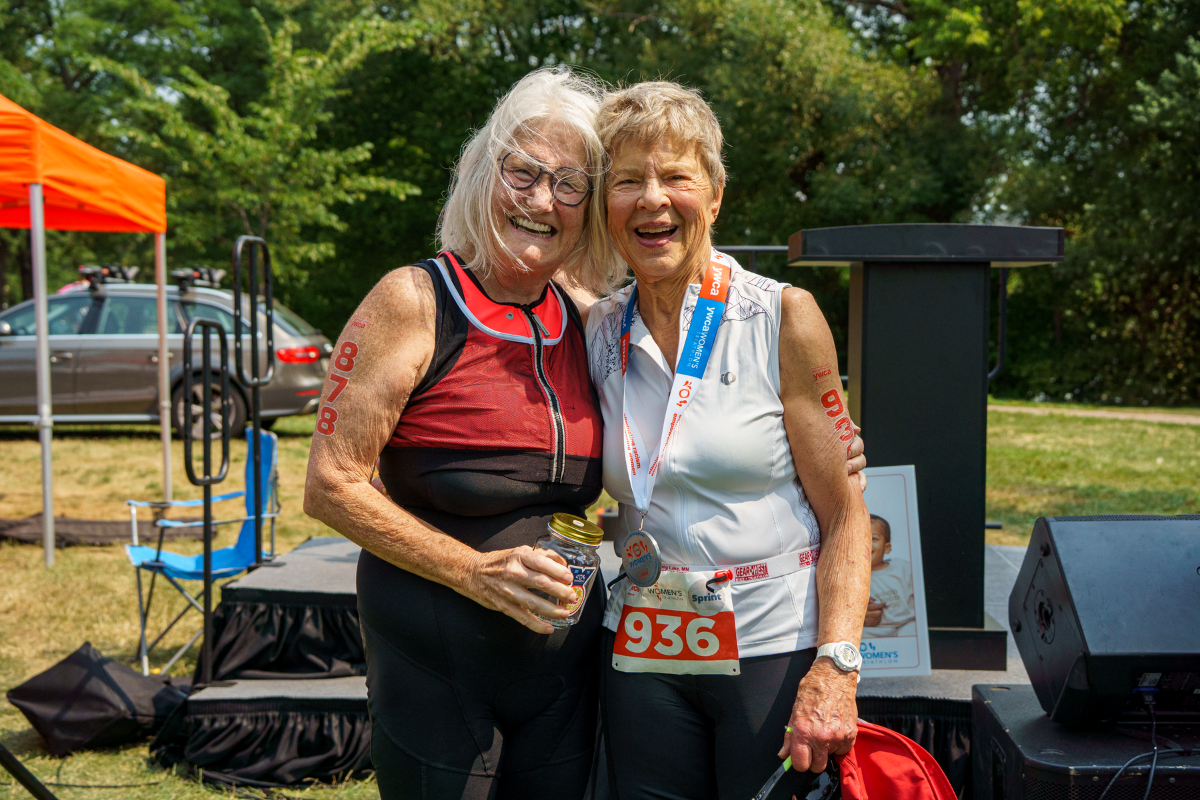
The oldest finisher, AnnLiv B., 84, crossed the finish line with her nieces. Another octogenarian, 82-year-old Patsy L, has completed over 40 triathlons, including the YWCA Women's Triathlon five times.
"I hope to still be doing this when I'm over 90," Patsy said. "You don't know the fun you're missing if you don't start."
A heart attack survivor, Patsy's mantra is "don't blow anything out." She completed the race to a rousing ovation and was feeling good at the finish line.
YWCA Women's Triathlon is designed to be inclusive and accessible. In addition to athletes of all ages, this year included five racers who were deaf or hard of hearing. The field also included athletes with visual impairments. Volunteers coordinated with racers’ guides as needed for all aspects of the race.
The stories behind the participants were as diverse as the athletes themselves, demonstrating that there is no single path to the starting line.
Take the First Step
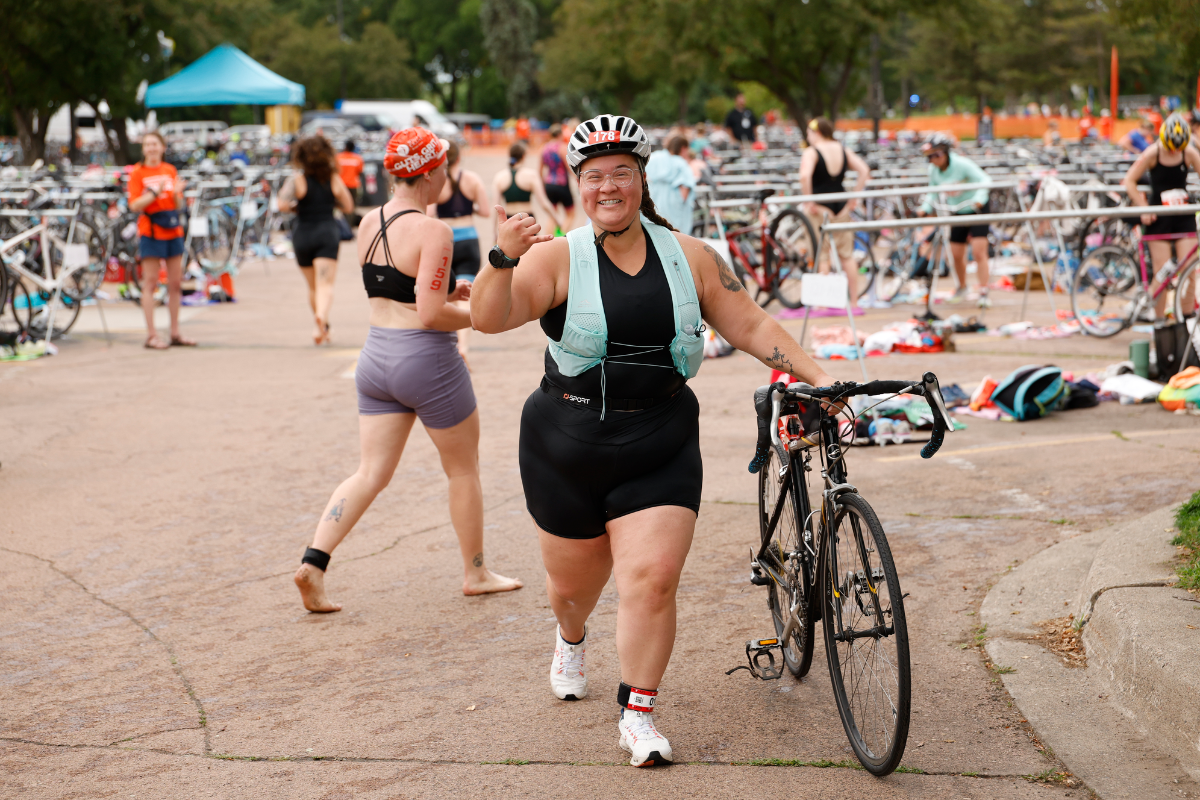
Triathlons can feel intimidating for many people. Whether you are uncomfortable with one of the core disciplines or shy away from competitive situations, many first-time triathletes felt the same way.
For first-timer Felicia O., 26, the race was actually the least stressful part of her weekend.
"Yesterday, I took the LSAT for law school," Felicia said. "I stressed more about that, so when I got to today, I said I have nothing to worry about. If something goes wrong, I'll walk. It's my first time, so forward is a pace and just finishing is my PR."
Felicia was one of many first-time participants we talked to at the 2026 race. Whether they were in their 20s or their 70s, many found joy in overcoming obstacles and completing the event.
Using YWCA Minneapolis Tri Training Classes to Prepare
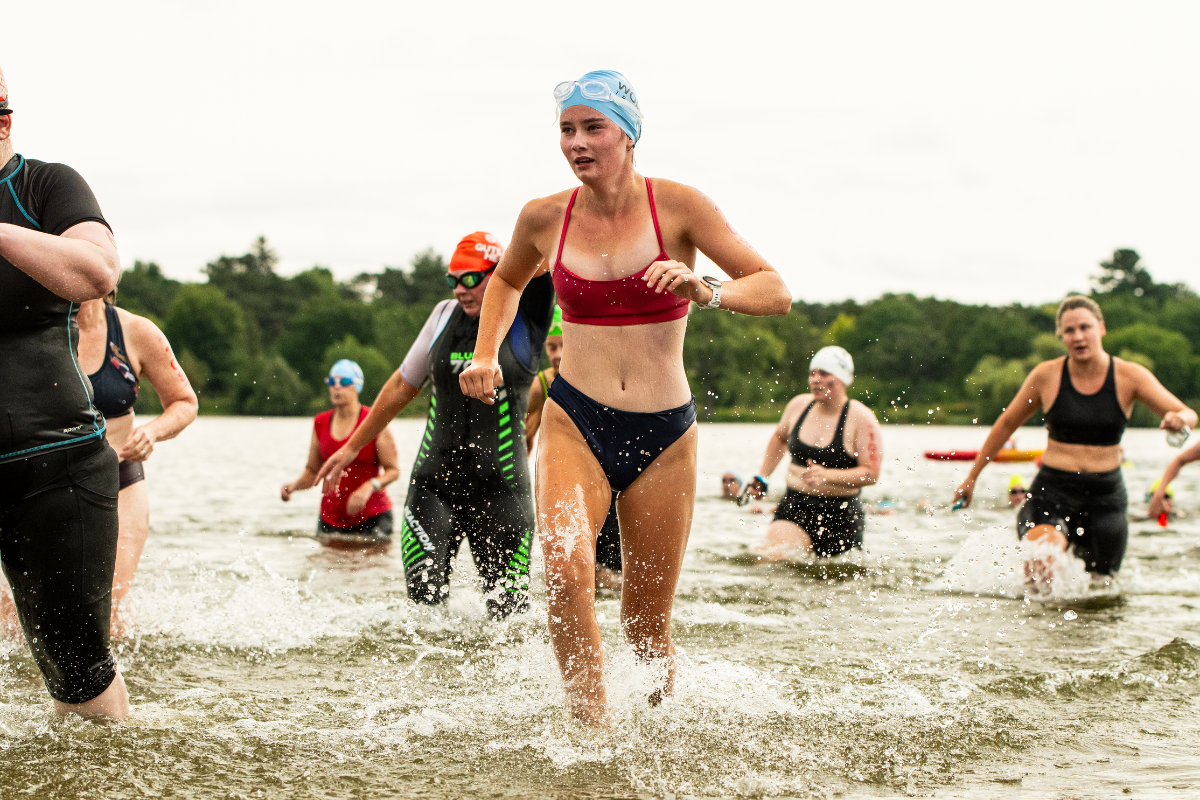
Many potential participants are intimidated by different aspects of the race. Open water swimming is often the biggest hurdle for first-time participants. For example, Angie C., 38, had never swum in open water before.
"I really loved the courses at the lake, and getting used to swimming," Angie said. "It's a lot harder in a lake. One day was really windy and I got kind of seasick from bobbing up and down. But it wasn't as hard as I thought it would be on race day. It felt a lot shorter because I went to all the classes."
Beyond practicing open-water swimming skills, Angie said the classes helped them get over several anxiety-producing items, like what the course is and what transition looks like.
Angie's experience highlights why many athletes take advantage of YWCA Minneapolis training opportunities. Athletes can take advantage of training plans, and classes like swim practice, run ride repeat (R3) and mini triathlons. Swim practices help athletes build confidence and endurance, making race day feel less daunting.
Stronger Together
While many think of endurance sports like triathlon as individual pursuits, YWCA Women's Tri celebrates groups coming together. This can take shape as friends, families or neighbors competing together as a buddy group, or as relay teams. Beyond finding success in training together, many of our athletes find joy in completing the race with their support networks.
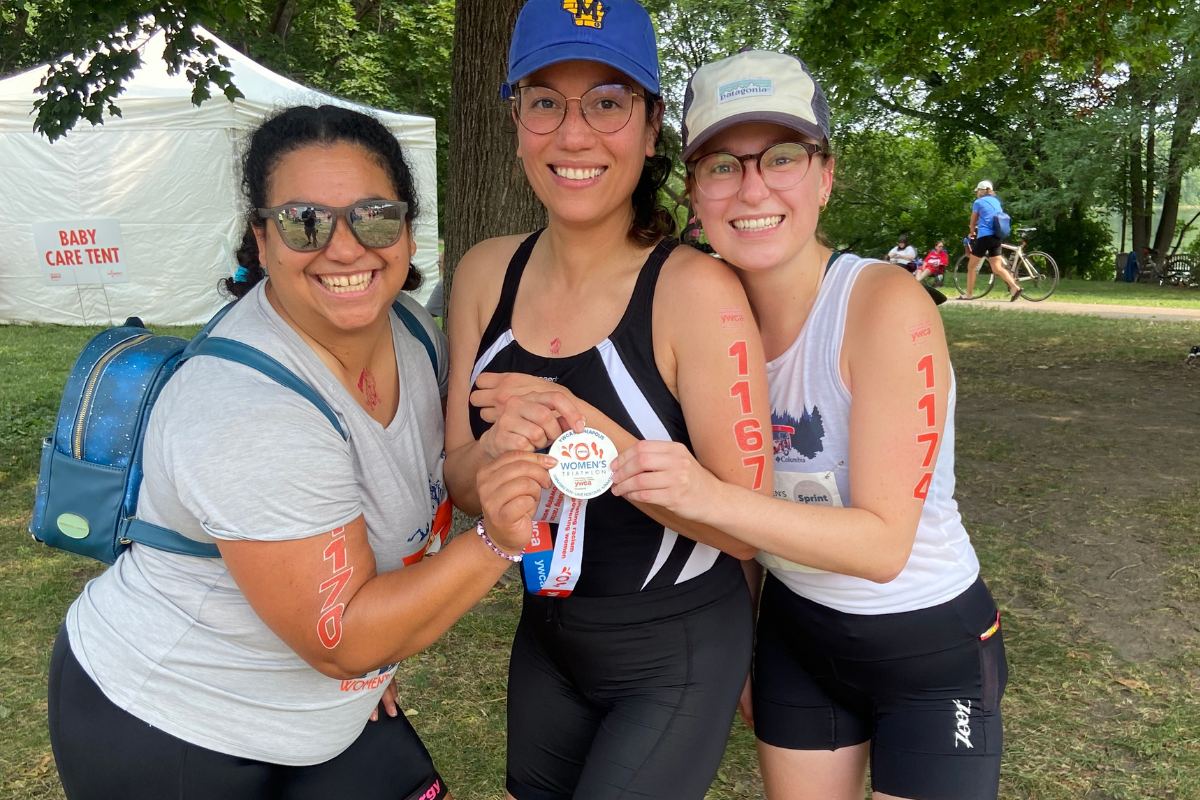
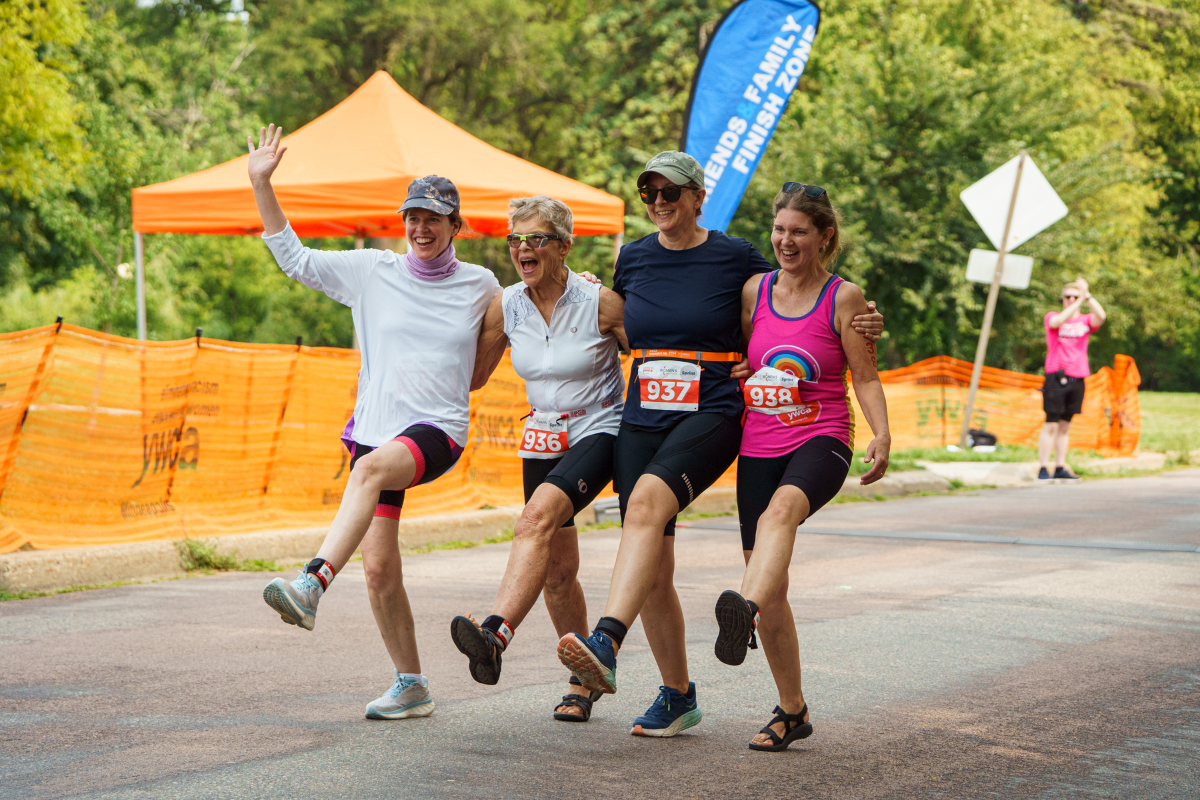
Friends Brenna G., 39, Emily R., 40, and Maggie M., 46, have done the event together for years. Each specialized in a different discipline, but they'd wait for each other at transition.
"This year we trained less than we did in years past, but we approached it differently," Brenna said. "We wanted to do it together instead of all of us pursuing PRs. We were together in a buddy group, and we'd wait for each other at the transition area. This is the first time we've crossed the finish line as a group. We're going to do that every year now."
Finishing with people you care about, whether it's your training friends or the family you build your world around, creates powerful moments crossing the finish line and memories that last a lifetime.
Their experience reflects a broader tradition at the Women's Triathlon, where participants often celebrate one another's accomplishments as enthusiastically as their own.
The Impact YWCA Women's Triathlon Makes in the Community
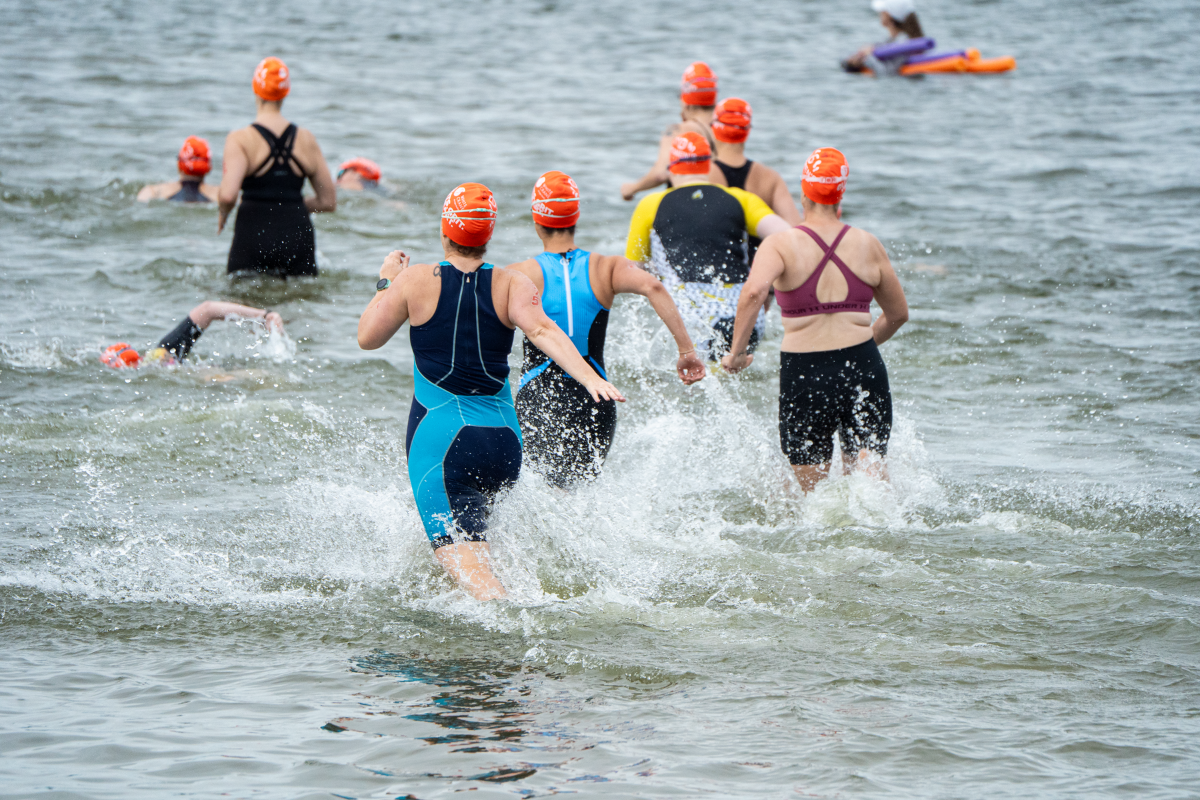
YWCA Women's Triathlon serves two purposes. It is one of the most visible ways YWCA Minneapolis advances its mission to eliminate racism and empower women and girls, and it is also an important fundraiser for the organization.
Revenue from race registrations, sponsorships and peer-to-peer fundraising helps support YWCA Minneapolis programs that serve more than 15,000 people annually.
The Century team of Claire S., 57, and Mira B., 59, worked to raise over $2,000 to support the organization. Before the race, Claire and Mira shared why supporting YWCA Minneapolis was an important part of their experience.
"We're racing to support YWCA Minneapolis and their mission of eliminating racism and empowering women," Claire said. "That mission isn't abstract to us, it's the work we show up for every day in our lives and businesses."
After completing the race, Claire noted the supportive environment.
"I've had a smile on my face the whole time," Claire said. "I think anyone can do a tri. If you can move your body and be committed and listen to your body, you can do this."
Looking Ahead
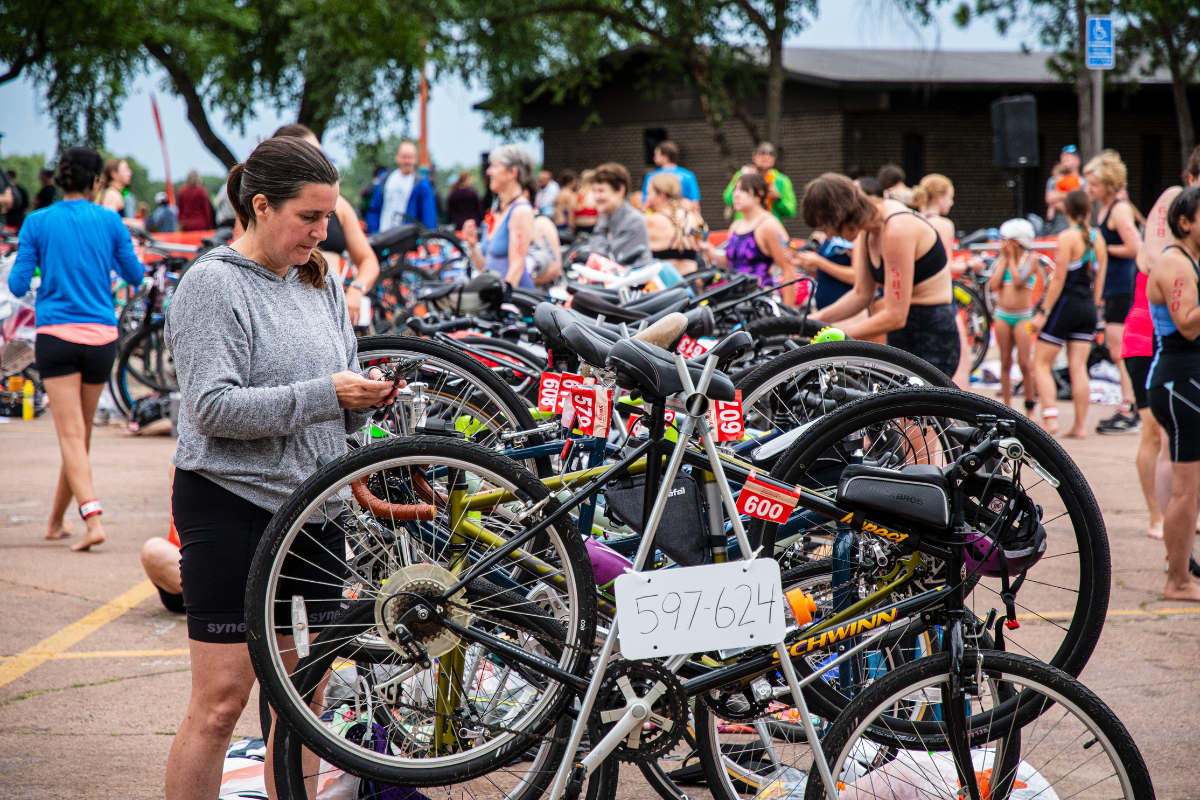
YWCA Women's Triathlon is a powerful celebration of women and community. Whether it's your first triathlon or your 50th, we hope you'll join us on Sunday, Aug. 8, 2027.
Whether you participate, volunteer or sponsor the event, there's a place for you in this community.